
Sun Belt Commissioner Highlights League's Rise at Sun Belt Media Days
As Arkansas State prepares for what many believe could be one of its most anticipated football seasons under head coach Butch Jones, Sun Belt Conference Commissioner Keith Gill made one thing clear Wednesday: the Red Wolves are competing in one of the strongest Group of Five conferences in college football.
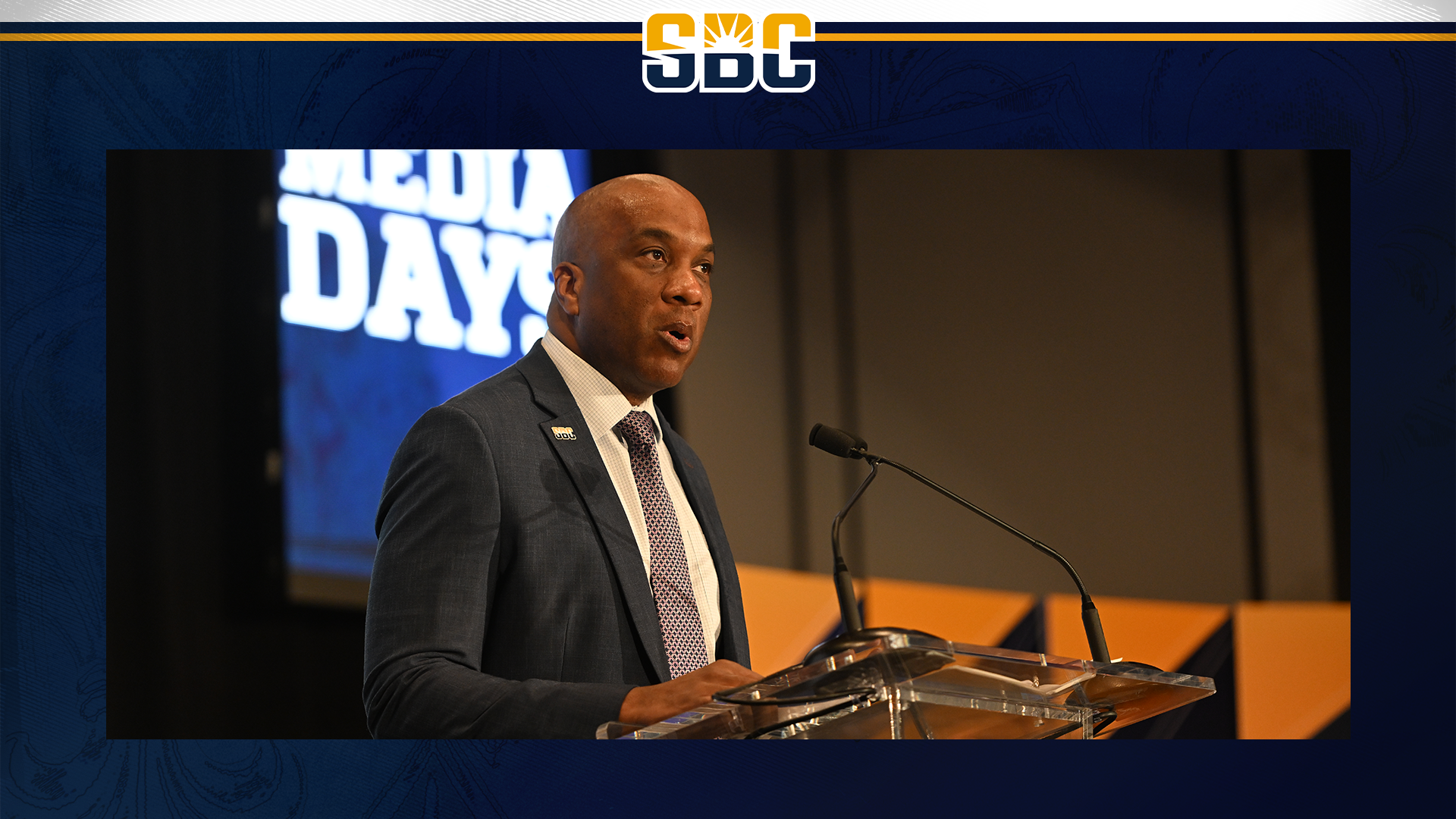
During his annual State of the Conference address that opened the 2026 Sun Belt Football Media Days at the New Orleans Marriott Warehouse Arts District, Gill highlighted the conference’s unprecedented success over the past four seasons while pointing to an even brighter future.
“We have enjoyed the best four-year run in conference history, and I believe, the best four-year run of any peer conference,” Gill said. “But I firmly believe, after 50 years of tremendous growth and achievement, our best days are still ahead of us.”
For Arkansas State, Gill’s comments reinforce just how difficult the climb to the top of the Sun Belt has become.
After consecutive winning seasons and bowl victories under Jones, the Red Wolves enter the 2026 season with legitimate aspirations of competing for a West Division title. Doing so will require navigating a conference that has established itself as arguably the nation’s premier Group of Five league.
The Sun Belt reached another milestone in 2025 when James Madison became the conference’s first representative in the College Football Playoff. That accomplishment followed another historic baseball season as Troy advanced to the Men’s College World Series, giving the conference back-to-back appearances in Omaha.
Gill credited the league’s sustained success to its overall depth rather than the accomplishments of a handful of programs.
“In the first 14 seasons of Sun Belt football, we produced three 10-win teams,” Gill said. “In the last 11 seasons we’ve produced 22, including multiple 10-win teams in eight-straight seasons.”
The commissioner noted the conference has also dramatically increased its postseason success.
“In those first 14 seasons the league had 25 bowl participants,” Gill said. “In the last 11 we have had 73, including averaging 10 bowl-eligible teams over the past three years.”
Those numbers illustrate the challenge awaiting Arkansas State.
Unlike conferences where one or two teams dominate annually, the Sun Belt has become one of the deepest leagues in the country, with multiple programs capable of competing for conference championships each season.
Gill also highlighted the conference’s success against Power Four opponents.
“From 2022 to 2025, we earned 12 wins over autonomy conference football programs and led our peer conferences in Bowl Season participation each year,” Gill said. “Over the last seven years, six Sun Belt teams have finished in the final College Football Playoff Top 25, and we’ve hosted ESPN’s College GameDay three times.”
For Arkansas State, those achievements provide additional opportunities to elevate the program nationally.
If the Red Wolves can emerge from the Sun Belt race this season, they’ll have accomplished it against one of the most respected Group of Five conferences in college football.
Gill also discussed the addition of Louisiana Tech, which officially joined the Sun Belt on July 1.
The Bulldogs immediately become a West Division rival for Arkansas State and renew a series that dates back decades.
“Louisiana Tech is an ideal fit for our conference, bringing a strong record of competitive success and a geographic fit that strengthens our footprint,” Gill said.
He specifically pointed to the rivalry opportunities created by the move.
“Their addition renews in-state rivalries with ULM and Louisiana, creates compelling matchups with Southern Miss and Arkansas State, improves travel and gives fans more games that matter,” Gill said. “They make us stronger in a myriad of ways.”
The addition of Louisiana Tech continues what Gill described as a strategic approach to conference expansion.
Rather than stretching the league’s geographic footprint, the Sun Belt has focused on adding regional rivals capable of strengthening competition across multiple sports.
“Since 2021, the Sun Belt has taken a different path by strategically adding five brands that strengthen our conference in football, men’s and women’s basketball, baseball and softball,” Gill said. “These additions deepen rivalries in both divisions, create compelling matchups, increase fan engagement and improve travel efficiency for our schools and fans.”
While football remains the conference’s highest-profile sport, Gill emphasized the Sun Belt’s recent success across the athletic department.
“The Sun Belt excels well beyond football,” he said.
The conference placed eight baseball and softball teams into NCAA Tournament play this past season while also qualifying multiple teams in men’s soccer and men’s golf.
Gill also addressed issues facing college athletics, including possible expansion of the College Football Playoff and federal legislation designed to create more consistency in transfer and eligibility rules.
“There’s significant discussion about the College Football Playoff and whether it should expand,” Gill said. “The Sun Belt could reasonably support the largest possible expansion to create more opportunities for our teams. But the issue is more complicated than that.”
He also expressed support for portions of the proposed Protect College Sports Act, particularly provisions addressing the transfer portal.
“The untold story is the transfer student-athletes who do not find another school,” Gill said. “They have nowhere to play.”
While Wednesday’s activities focused on East Division programs, Arkansas State and the rest of the Sun Belt West will take center stage Thursday.
Jones, junior wide receiver and return specialist Chauncy Cobb, and junior safety Brandon Barnes are scheduled to represent the Red Wolves during media day activities.
Arkansas State enters the season after being selected to finish third in the Sun Belt West Division in the preseason coaches poll, but with seven preseason First Team All-Sun Belt selections—the most in the conference—the Red Wolves will arrive in New Orleans with expectations that continue to rise.
If Gill’s assessment of the Sun Belt is accurate, Arkansas State won’t simply have to be good to compete for a conference championship.
The Red Wolves will have to navigate what has become one of the deepest and most competitive conferences in the Football Bowl Subdivision.


